

Zephyr Dragoon Development
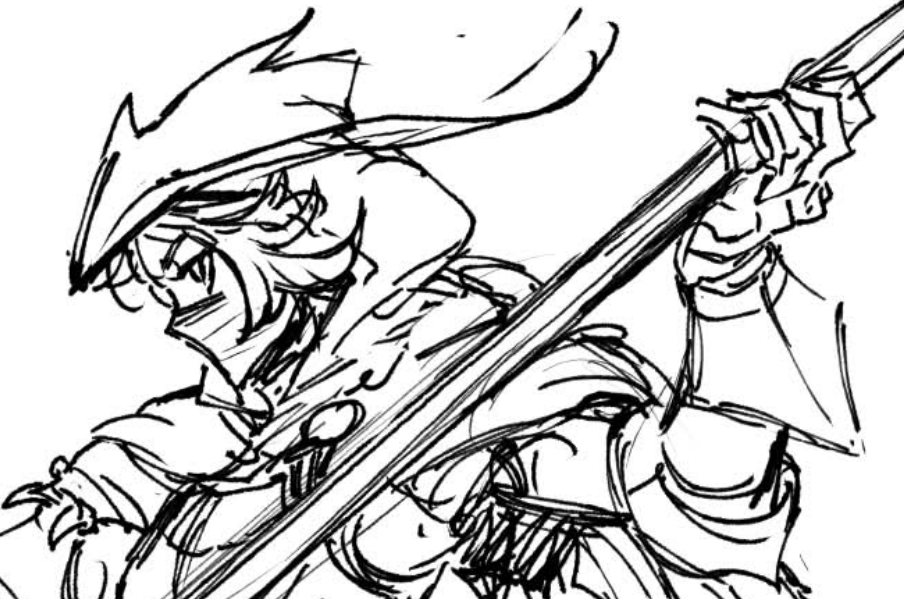
The first Idea
The Zephyr Dragoon is one of the earliest original characters developed while worldbuilding for the Stonefang universe, and one of the first intended to make the jump from character design into a physical miniature.
Character design by Pirata Armoury.
From the beginning, the focus was on creating a character with a strong silhouette, a sense of movement and an identity that could remain recognisable when translated from artwork into a tabletop miniature.
Starting With the Dragoon
The name Zephyr Dragoon establishes much of the character's direction before getting into any detailed lore.
"Zephyr" brings with it the idea of wind, speed and movement, while "Dragoon" gives the character a more martial identity.
The challenge was to bring those ideas together without simply falling back on the traditional image of a heavily armoured fantasy warrior.
As the design developed, I wanted the character to feel agile rather than cumbersome, with enough personality in the overall shape that you could begin to recognise the character even before looking at the smaller details.
That became particularly important knowing from the beginning that the character was eventually going to become a miniature.
Building a Recognisable Silhouette
One of the biggest lessons from developing characters for tabletop miniatures is that detail isn't always what makes a design memorable.
At miniature scale, you often read the overall shape of a character before anything else.
Because of that, a lot of the early Zephyr Dragoon development concentrated on the silhouette.
The proportions, clothing, armour and major shapes all needed to work together rather than relying on surface decoration to make the character interesting.
This became an important early step in establishing the design language I want to continue developing across Stonefang.
There can still be detail, but it should support the character rather than hide the underlying design.
If a character only works once every buckle, engraving and piece of ornamentation has been added, then the core design probably isn't strong enough yet.
Movement as Part of the Character
Another important element of the Zephyr Dragoon is the feeling of movement.
A miniature is obviously a static object, but the pose and silhouette can still suggest what happened immediately before or after the moment being represented.
For this character, I didn't want the final model to feel like someone simply standing with a weapon.
The intention is to create something with energy.
That doesn't necessarily mean an exaggerated action pose. Small decisions in stance, weight distribution and the direction of clothing can do a lot to suggest speed and motion without making the miniature unnecessarily difficult to assemble, paint or place on the tabletop.
That balance between character design and practical miniature design is something I expect to explore repeatedly as Stonefang develops.
Designing for a Physical Miniature
The Zephyr Dragoon is particularly important because the character is moving beyond concept development and into sculpting.
That introduces an entirely different set of considerations.
Concept artwork has considerably more freedom than a physical miniature. Elements can overlap in ways that might not work in three dimensions, extremely thin details can be drawn without worrying about strength, and the viewer only ever needs to see the character from the angles chosen by the artist.
A miniature doesn't have that luxury.
It needs to work from every direction.
The sculpt also has to consider things like durability, casting or printing, assembly, painting access and how the character physically connects to the base.
Those limitations aren't necessarily negative. In many cases they force the design to become clearer.
The aim with the Zephyr Dragoon is to preserve the important parts of the original character while allowing the sculpt to make the decisions necessary for the design to work as an actual tabletop piece.
Part of a Larger Universe
The Zephyr Dragoon isn't being designed as an isolated miniature.
The character is part of the ongoing worldbuilding for the Stonefang universe and is intended to eventually exist within Fates Demand, the tabletop skirmish game currently being developed alongside the miniature range.
That means the design also needs to work as part of something larger.
As more characters are created, they won't necessarily come from the same culture, wear the same equipment or share the same visual identity, but they should still feel like they belong to the same universe.
The Zephyr Dragoon was one of the first opportunities to begin defining what that shared visual language could look like.
From Concept to Sculpt
The next major step for the Zephyr Dragoon is seeing how the character translates into three dimensions.
A sculptor inevitably interprets a design slightly differently from the original concept artwork. Proportions change, shapes become more apparent, and elements that looked relatively simple in two dimensions can suddenly become much more important.
Rather than treating that as simply reproducing an illustration in 3D, I see the sculpt as another stage of the character-design process.
The goal is for the final miniature to feel like the Zephyr Dragoon, not merely a three-dimensional copy of a drawing.
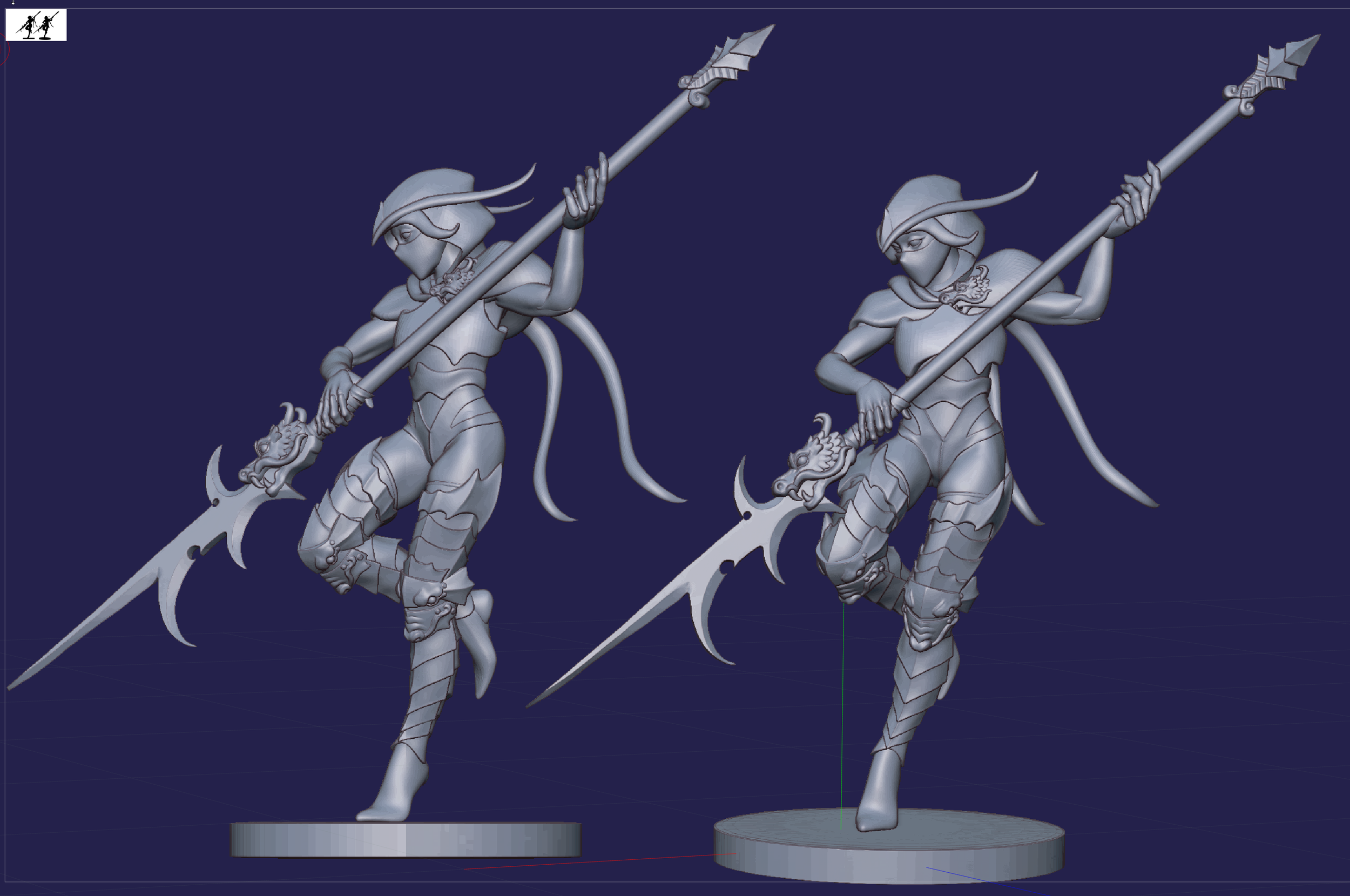
Design Process
Sculpting progress by Asa_Sculpts
Where the Zephyr Dragoon Goes From Here
There is still plenty that I don't want to reveal about the character yet.
The Zephyr Dragoon's place within Fates Demand, the wider setting and the character's eventual tabletop identity can all be explored properly as those parts of the project develop.
For now, the focus is on getting the character itself right.
Once the sculpt develops further, I'll be able to go into considerably more detail about the process of taking the Zephyr Dragoon from concept artwork to a finished miniature — including what changed along the way and why.
As one of the earliest original Stonefang characters, the Zephyr Dragoon has played an important part in establishing the direction for the miniatures that will follow.
Design Credit:
Character design by Pirata Armoury
Character Sculpting by Asa_Sculpts
